
A realistic Barbados beach-bag checklist
Pack for the sun, the sea—and the facility that is unexpectedly closed
The best Barbados beach bag is light enough for a narrow access lane but complete enough for a quiet beach with no working shower, no available shade and no vendor selling the one thing you forgot.
The quick answer
For almost every Barbados beach day, take water, broad-spectrum water-resistant SPF 30+ sunscreen, a hat, protective clothing, swimwear, a towel, secure footwear, a waterproof phone pouch, essential medication, a small amount of cash and a bag for your rubbish. Add shade, food and a first-aid kit for quiet beaches; properly fitted snorkelling gear for reef days; and extra clothing, snacks and flotation for children.
Before packing more: check the beach guide, official marine forecast and your transport. A cooler, umbrella and three towels are wonderful until the final access involves steps, soft sand and a long walk.
Tick, print or screenshot
Barbados beach-day packing checklist
Use the core list for every beach, then add only the modules that match your day.
Core essentials
Comfort and backup
Add for your activity
The non-negotiables
Ten things to take to almost every Barbados beach
1. More water than feels elegant
Pack enough drinking water for the journey, beach time and return—not only for the minutes you expect to spend swimming. Heat, walking and saltwater make a small bottle disappear very quickly.
Better system: one reusable bottle per person plus additional shared water for a remote or extended visit.
2. Layered sun protection
Use broad-spectrum, water-resistant sunscreen with SPF 30 or higher, but do not ask sunscreen to do every job. Add a secure hat, UV-protective top or cover-up, sunglasses and shade.
Remember: water and sand reflect ultraviolet radiation, and breeze can hide how strongly the sun is affecting you.
3. A waterproof valuables system
Use a waterproof phone pouch for the small items that must remain with you and a larger dry bag for towels or clothing. Test closures before the holiday rather than discovering a leak above a shipwreck.
Keep it simple: fewer valuables mean fewer things requiring supervision.
4. Footwear suited to the route
Flip-flops work on smooth sand but can be miserable on hot roads, sharp coral rubble, muddy paths or cliff approaches. Choose footwear that stays on during the actual access route.
Water shoes: useful for selected rocky entries, but not permission to stand on coral or enter unsuitable surf.
5. A quick-dry towel and dry layer
A compact towel is easier to carry than a heavy hotel towel and dries faster between swims. Add dry underwear or a light outfit when travelling by bus, taxi or cruise shuttle.
Driving tip: leave one spare towel in the car for a second swim, muddy feet or sudden rain.
6. Essential medication
Carry prescribed emergency medication, inhalers, allergy treatment and other essentials with you rather than leaving them in a hot vehicle. Protect them from heat and water according to professional instructions.
Useful backup: keep a medication list and emergency information accessible to companions.
7. Card and modest cash
Many established businesses accept cards, but a small vendor, chair operator, bus or remote food stop may be easier with cash. Do not carry the whole holiday budget to the beach.
Separate them: keep one payment method apart from the other.
8. Food you can rely on
Even a beach known for food may have a vendor closed, busy or unable to meet an allergy or dietary requirement. Carry safe snacks and enough food for anyone who cannot improvise.
Pack for heat: use a small insulated bag where food safety requires it.
9. A charged phone with saved details
Save the beach pin, accommodation address, driver number, booking confirmation and route before leaving Wi-Fi. A portable power bank is useful on driving days or long excursions.
Do not rely on signal: screenshots work when an app does not.
10. A leave-no-trace bag
Carry away food packaging, wet wipes, broken toys, nappies and anything else you brought. A separate reusable bag also contains wet clothing and sandy shoes on the return journey.
Leave behind: coral, living shells, wildlife and anything that belongs to the shoreline.
Sun protection that survives swimming
Pack more than one line of defence
The CDC’s current traveller guidance recommends broad-spectrum sunscreen with SPF 30 or higher. It also stresses protective clothing and shade because water and sand reflect ultraviolet radiation and can increase exposure.
- Apply enough sunscreen. Adults need much more than a token face-sized amount for exposed skin.
- Follow the product’s timing and reapplication instructions, especially after swimming, sweating or towelling.
- Cover forgotten areas: ears, scalp or parting, shoulders, backs of knees and tops of feet.
- Use a hat that stays on when the trade wind arrives.
- Choose clothing that can get wet rather than removing protection every time you swim.
- Do not trust cloud alone. UV exposure continues even when the beach feels cooler.
About “reef-safe” labels: the term is used inconsistently. Choose a sunscreen you will apply correctly, avoid spraying it over sand or people, use clothing to reduce the amount needed and follow any current local or tour-operator rules.
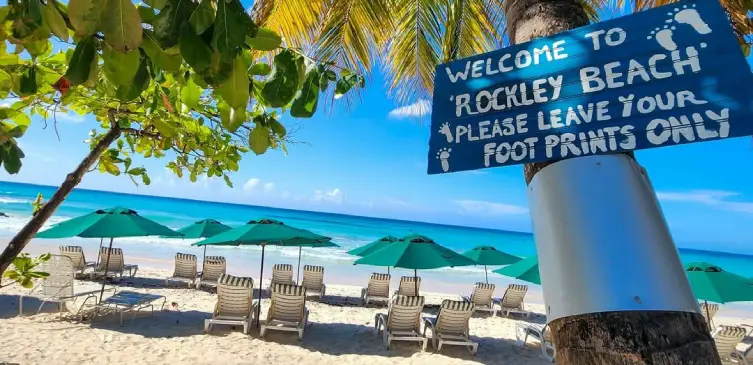
Pack for the beach you chose
How the bag changes by coast and facilities
| Beach type | Examples | What you may find | Add to the bag | Avoid carrying |
|---|---|---|---|---|
| Serviced public beach | Accra, Miami Beach and Brownes Beach | Food, parking, lifeguard presence, changing or shower facilities and rentals are commonly associated with these areas. | Core essentials, card and cash, a light cover-up and a backup snack. | Large shade structures or a full picnic setup unless you have confirmed they are needed. |
| Serviced bay or beach-club day | Carlisle Bay, Mullins or selected west-coast hotels | Loungers, umbrellas, food, watersports and toilets may be available through a named business. | Booking details, payment method, dry clothing and only the equipment not included. | Towels, snorkel gear or coolers before checking the day-pass inclusions and rules. |
| Quiet west-coast beach | Gibbes, Reeds Bay or smaller access lanes | Beautiful sand and calmer-looking water, but fewer public facilities and vendors. | Water, food, shade, rubbish bag, first aid, offline map and confirmed return transport. | Unnecessary valuables or anything too bulky for a narrow public access. |
| Scenic east-coast stop | Bathsheba, Cattlewash or Martins Bay | Powerful scenery, Atlantic exposure, picnic areas in selected locations and limited safe swimming. | Secure walking shoes, rain layer, water, camera protection and picnic supplies. | Inflatables or equipment that encourages an unsuitable casual swim. |
| Remote cove or cliff approach | Bottom Bay, Foul Bay and northern viewpoints | Steps, rough ground, little shade, no lifeguard and uncertain vendors. | Firm footwear, compact shade, extra water, full first aid, charged phone and exact map pin. | Heavy coolers, wheeled bags and more equipment than the group can carry back uphill. |
Never pack based solely on an old review. A chair vendor, washroom or beach bar mentioned online may be closed on the day. Treat available facilities as a bonus until directly confirmed.
For snorkelling days
Take equipment that fits—and judgement that does not depend on it
Mask and snorkel
A personal mask is worth carrying when fit, prescription lenses or anxiety matter. Test the seal before the trip and keep a simple defogging solution that is suitable for the lens.
Fins and flotation
Choose fins that fit without rubbing and suit the entry. Use properly fitted flotation when needed, but never treat fins or a vest as a substitute for swimming ability, supervision or local guidance.
Visibility and boat awareness
Use equipment recommended by the operator or local rules in busy water. Keep loose straps contained, stay out of boat channels and do not swim towards offshore wrecks simply because the water looks calm.
Do not carry a full snorkelling kit to force the activity. When swell, visibility, current or boat traffic looks wrong, leave it in the bag and enjoy the beach another way.
For babies, children and teenagers
The family bag grows fast—make each item earn its place
Babies and toddlers
- Reliable shade rather than a hope that a tree is free
- UV clothing and a change of dry clothes
- Swim nappies, normal nappies and disposal bags
- Changing mat and wipes
- Safe drinks and snacks
- Any allergy or emergency medication
- One familiar small toy—not the playroom
Young swimmers
- Properly fitted flotation aid appropriate to the child
- Bright swimwear that is easy to see
- UV top and secure hat
- Dry towel and warm layer for the journey back
- Water shoes only where the entry requires them
- Simple snacks before tiredness becomes a negotiation
Older children and teenagers
- Own water bottle and sun protection
- Phone protection rather than a phone buried in sand
- Activity equipment matched to conditions
- Clear meeting point and return time
- Enough money for an agreed purchase—not an unattended wallet
- Responsibility for carrying part of the shared kit
The item adults forget to pack is a supervision plan. Agree who is actively watching children in the water. A group of adults vaguely looking in the same direction is not the same thing.
For mobility, sensory and medical needs
Pack the support items the beach cannot provide
Mobility equipment
- Small tools and essential spares
- Protection from salt spray and sand
- Transfer items already used safely at home
- Charged batteries and confirmed vehicle capacity
- Photographs or measurements of the verified route
Sensory and communication support
- Ear defenders or ear protection
- Sunglasses or visor for glare
- Visual plan, communication cards or phone notes
- A familiar calming item
- Pre-agreed quiet retreat and exit signal
Health and temperature
- Medication in original labelled packaging where appropriate
- Written allergy or emergency plan
- Cooling items used safely by the traveller
- Extra water and suitable nutrition
- Contact details for accommodation, provider and medical help
Never leave critical medication or mobility batteries in a hot vehicle. Follow the manufacturer’s or clinician’s storage guidance and protect equipment from direct sun, water and sand.
For cruise passengers
Pack light enough to return to the ship without drama
Best cruise-day approach: one small backpack or beach tote per adult, one shared dry pouch and no equipment that depends on an uncertain late return.
For driving and multi-beach days
Build a small vehicle backup kit
Keep in the vehicle
- Spare towel and dry clothing
- Extra drinking water
- Charging cable and power bank
- Rubbish and wet-clothing bags
- Light rain layer
- Basic first-aid supplies
Carry onto the sand
- Phone, keys and essential medication
- Immediate water and sun protection
- Only the food needed for that stop
- Small dry bag
- Footwear required for the access
Never leave visible
- Passports and unnecessary documents
- Laptops or camera bags
- Wallets and spare phones
- Shopping bags that look valuable
- Medication damaged by heat
Save offline pins for both the beach and the car. A coastal access lane can look very different after sunset, a rain shower or several hours away.
Sudden shower, seaweed or closed facilities
Pack a backup plan, not just backup objects
What not to take
Items that create more work than enjoyment
Unnecessary valuables
Leave passports, expensive jewellery, laptops and spare devices securely at your accommodation unless they are genuinely needed. A waterproof pouch is useful; it is not a portable hotel safe.
Oversized speakers
A beach is shared space. Large speakers add weight, battery anxiety and an excellent opportunity to make complete strangers dislike your playlist.
Glass containers
Broken glass and bare feet are a terrible partnership. Use reusable non-glass drink and food containers and follow any site-specific rules.
Cheap inflatables in open water
Inflatables are not safety equipment and can be moved by wind or current. Keep novelty floats for a controlled pool unless local conditions and supervision genuinely support their use.
Wildlife souvenirs
Do not take living shells, coral, turtle material or anything occupied by marine life. Photograph the find and leave it performing its ecological job.
The entire hotel room
Every additional item must be carried, watched, dried and returned. The best beach bag supports the plan without becoming the plan.
Final door check
The 30-second test before leaving
Questions travellers ask
Barbados beach packing FAQs
What should I pack for a Barbados beach day?
Take water, broad-spectrum water-resistant SPF 30+ sunscreen, a hat, protective clothing, swimwear, a towel, suitable footwear, a waterproof phone pouch, essential medication, payment options and a rubbish or wet-clothing bag. Add shade, food and first aid for quiet beaches.
Do I need to take a beach towel to Barbados beaches?
Take a quick-dry towel unless your hotel, beach club or tour explicitly includes one. Hotel towels may not be permitted off the property, and rental availability should not be assumed.
Should I take water shoes to Barbados?
Water shoes are useful for selected rocky entries, coral rubble and hot access paths, but many popular beaches have sandy entries. Choose footwear for the specific route and never use shoes as a reason to stand on coral or enter rough water.
How much sunscreen should I take?
Take enough for generous application and reapplication throughout the day. Current CDC traveller guidance recommends broad-spectrum SPF 30 or higher and notes that an average adult requires about one fluid ounce for a full-body application.
Can I buy food and drinks on Barbados beaches?
Popular beaches such as Accra, Brownes Beach and Miami Beach commonly have food nearby, while quiet or remote beaches may have no operating vendor. Carry water and a backup snack even when facilities are expected.
Do I need cash at Barbados beaches?
Carry a card plus a modest amount of cash. Established businesses may accept cards, while small vendors, chair operators, transport or local food stops may be easier with cash. Avoid taking unnecessary money or valuables.
What should I take for snorkelling in Barbados?
Take a well-fitting mask and snorkel, suitable fins, sun protection and properly fitted flotation when needed. Check whether a tour includes equipment before carrying your own, and never use equipment to compensate for poor swimming ability or unsafe conditions.
What should families pack for a Barbados beach?
Add reliable shade, UV clothing, bright swimwear, properly fitted flotation aids, safe snacks, extra water, dry clothes, nappies and changing supplies where relevant, plus any allergy or emergency medication.
What should cruise passengers take to the beach in Barbados?
Take the ship card and required identification, the all-aboard time, port and driver details, waterproof protection for documents, a dry cover-up and a compact bag. Keep a generous return buffer and avoid equipment that depends on an uncertain excursion return.
What should I leave behind on a Barbados beach day?
Leave unnecessary valuables, glass containers, oversized speakers and bulky equipment that the route cannot support. Do not remove living shells, coral or wildlife material from the beach.
How this guide was checked
This guide expands the original Beaches of Barbados checklist using current information from the CDC Yellow Book, Barbados Meteorological Services and Barbados Tourism Marketing Inc. It distinguishes facilities commonly associated with major beaches from items visitors should still carry as backup.
CDC traveller sun guidance · CDC medication travel guidance · Barbados Meteorological Services · Official marine forecast · Official Barbados beach-activity information
Editorial review: 6 August 2026. Facilities, vendors, weather and sea conditions can change. Follow current local guidance and individual medical or equipment instructions.
Pack for the actual beach
Choose the beach before filling the bag
Use the beach finder and island map to check access, coast, facilities and nearby alternatives. A good packing list becomes much shorter once you know exactly where you are going and what the day needs to achieve.