West, south, east and north compared
Choose your Barbados coast by the holiday you want—not the prettiest hotel photograph
The west usually gives the calmest classic beach holiday. The south offers the best mix of beaches, restaurants, transport and nightlife. The east delivers Atlantic scenery and surf. The north is road-trip country. Here is how to decide where to stay and which coasts to visit.
The quick answer
Choose the south coast for the best all-round first visit, especially without a car. Choose the west coast for calmer-looking water, sunsets, luxury and a slower beach rhythm. Stay on the east coast only when Atlantic scenery, surf and quiet matter more than easy swimming and amenities. Treat the north as a road-trip or specialist retreat rather than the default base for a conventional beach holiday.
One island, four very different coastlines
Barbados coasts at a glance
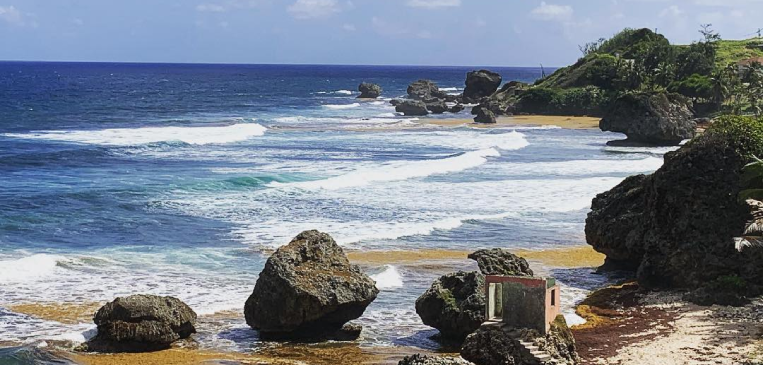
Barbados is small enough to explore from one base, but the coastline changes quickly. Official Barbados tourism guidance describes the west as calm and sheltered, the east as Atlantic-facing and dramatic, and the south as a varied coast where reef-protected swimming areas sit alongside more exposed waters towards the south-east.
| Coast | Best for | Sea character | Atmosphere | Transport & amenities | Where to investigate | Main compromise |
|---|---|---|---|---|---|---|
| West | SwimmingFamiliesSunsetsLuxury | Generally the most sheltered, with typically calmer Caribbean-facing bays. | Polished, relaxed and resort-led, with local fishing areas and historic Speightstown farther north. | Frequent buses along the main coast road; strong restaurants and services around Holetown and Speightstown. | Mullins, Paynes Bay, Fitts Village, Gibbes, Heywoods and Carlisle Bay. | Higher prices, discreet public access lanes, limited parking and busy watersports in selected bays. |
| South | First visitsNightlifeValueNo car | Varied: sheltered south-west bays, reef-influenced swimming beaches and increasingly exposed water towards the south-east. | Lively, practical and mixed—resorts, local beaches, restaurants, boardwalks and entertainment. | The strongest public-transport and everyday amenity mix, particularly between Bridgetown, Hastings, Worthing, the Gap and Oistins. | Accra, Worthing, Dover, Miami Beach, Maxwell and Carlisle Bay. | Busier, more built-up and less consistently calm than the west. |
| East | SurfSceneryWalkingQuiet | Atlantic-facing, with stronger swell, waves, currents and rugged rock formations. | Wild, breezy, rural and dramatically different from the resort corridor. | Fewer amenities and less frequent transport; a car or driver makes exploration easier. | Bathsheba, Cattlewash, Conset Bay, Skeetes Bay, Foul Bay and Crane. | Not the default choice for casual swimming; limited dining, shopping and evening options. |
| North | CliffsRoad tripsSeclusionPhotography | Rugged Atlantic edge, with cliffs, surging water, exposed coves and a few gentler-looking inlets. | Remote, quiet and exploratory rather than a continuous beach-resort zone. | Limited accommodation and public transport away from Speightstown; a vehicle is strongly useful. | Animal Flower Cave, River Bay, Little Bay, northern viewpoints and Six Mens on the north-west edge. | Few conventional swimming beaches, fewer services and longer journeys to the south. |
The most important nuance: the south coast is not one uniform sea. Carlisle Bay and the south-west differ greatly from wind-exposed Silver Sands, Inch Marlow and the south-east. Always choose the exact beach—not only the compass direction.
The classic Caribbean choice
West coast: calmer bays, sunsets and polished beach days
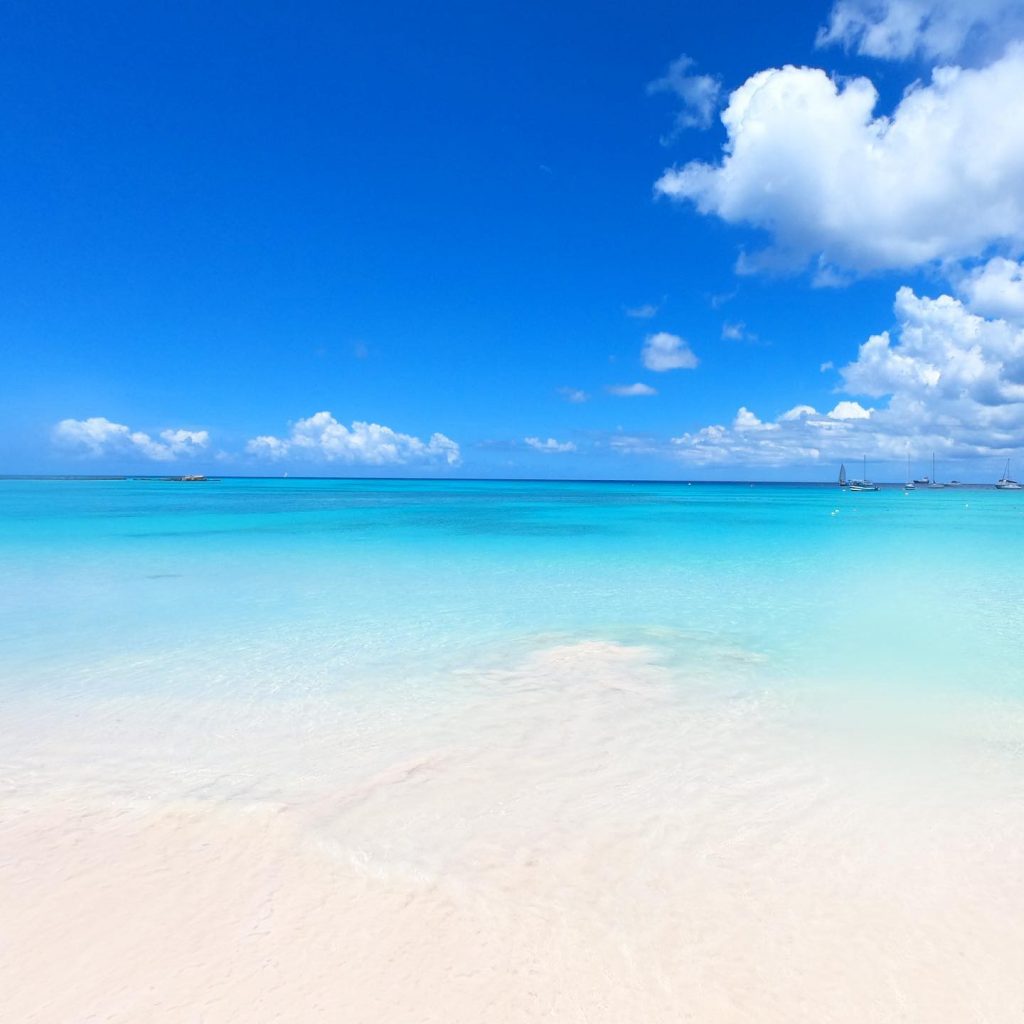
The west coast of Barbados faces the Caribbean side of the island and is the most reliable starting point for visitors who prioritise relaxed swimming, clear-looking water and sunsets. It runs from the Bridgetown and Carlisle Bay area through Fitts Village, Paynes Bay, Holetown, Gibbes and Mullins towards Speightstown and the north-west.
This is the coast associated with luxury hotels, villas, fine dining and the “Platinum Coast” name. That label can be misleading, however: public beaches remain public, and fishing communities, local bars and quieter stretches sit between the major resorts.
Choose the west coast when you want:
- Calmer-looking swimming for families or less confident swimmers
- A romantic or luxury-led holiday
- Easy access to catamarans, turtle trips and watersports
- Restaurants and evenings around Holetown
- A slower rhythm around Speightstown and the north-west
- Sunset as a daily appointment rather than a special excursion
Think twice when:
- You want the widest choice of affordable restaurants and nightlife within walking distance
- Your budget is sensitive to beachfront accommodation and taxis
- You dislike resort activity, loungers or watersports around popular bays
- You need obvious parking beside every public access point
Best west-coast bases: Holetown for restaurants and services; Paynes Bay or Fitts Village for a central beach base; Mullins and Gibbes for a northern holiday; Speightstown for more history and local rhythm.
The best all-round first base
South coast: beaches, restaurants, transport and nightlife in one corridor
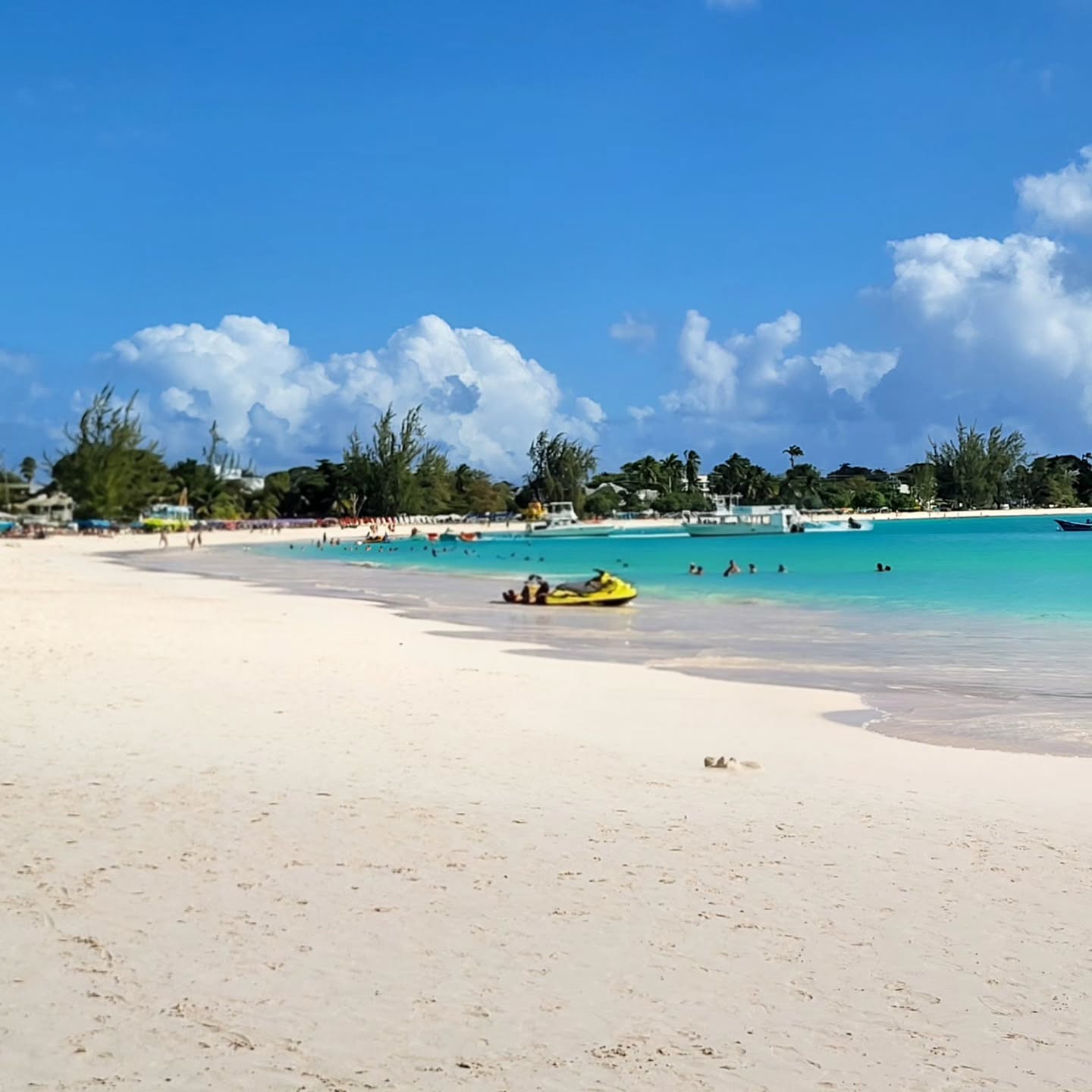
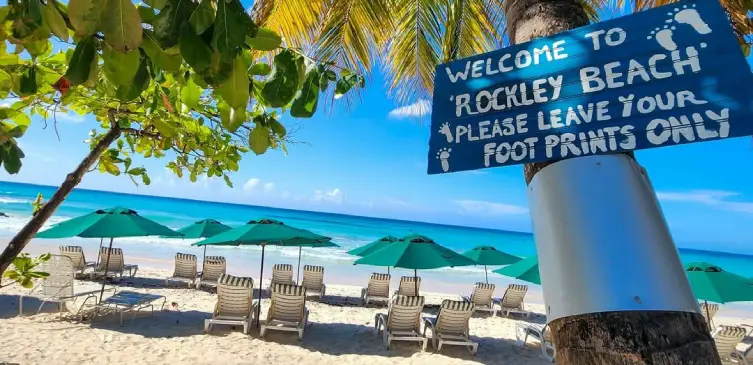
The south coast is the most adaptable choice for a first Barbados holiday. Bridgetown, Hastings, Rockley, Worthing, St Lawrence Gap and Oistins form a practical chain of beaches, food, accommodation, shopping and public transport.
The water changes as you move east. Carlisle Bay and the south-west are comparatively sheltered. Accra, Worthing and Dover can offer excellent swimming but may feel livelier than the west. Miami Beach has a more sheltered western cove and a more exposed eastern side. Farther towards Silver Sands and the south-east, wind and Atlantic influence increase.
Choose the south coast when you want:
- The strongest base without hiring a car
- A choice of hotels, apartments and guesthouses across budgets
- Restaurants, supermarkets and evening options close to the beach
- St Lawrence Gap nightlife or Oistins Fish Fry atmosphere
- The Richard Haynes Boardwalk for walking beside the coast
- A practical base for cricket at Kensington Oval or cruise-port days
Think twice when:
- Your ideal holiday means silence, seclusion and little development
- You want calm water to be the coast’s defining characteristic every day
- You are booking directly beside St Lawrence Gap but expect early nights
- You assume every beach east of Oistins behaves like Accra or Worthing
Best south-coast bases: Hastings or Rockley for the best overall balance; Worthing for central convenience; St Lawrence Gap for nightlife; Dover for resort energy; Oistins or Enterprise for a more local and family-friendly rhythm.
Barbados beyond the resort corridor
East coast: Atlantic surf, sunrise and extraordinary scenery
The east coast feels like another island. Bathsheba, Cattlewash, Martins Bay, Conset Bay and the surrounding hills are shaped by Atlantic wind, swell and erosion. This is where visitors come for the Soup Bowl surf break, long views, coastal drives, photography and a slower rural atmosphere.
Official Barbados guidance does not recommend the unsheltered eastern shoreline as a general swimming coast. Some protected pools and bays may be usable in suitable conditions, but that is a specific local decision—not a reason to treat the whole east as a hidden swimming secret.
Choose the east coast when you want:
- Surf, especially around Bathsheba and Soup Bowl
- A quiet retreat away from the main hotel corridor
- Sunrise, photography, hiking and breezy coastal views
- A self-catering cottage or small historic inn
- A holiday where exploring matters more than nightlife
- To experience rural Barbados rather than remain in resort areas
Think twice when:
- Daily casual swimming is central to the holiday
- You need frequent buses, supermarkets and a wide restaurant choice
- Members of your group expect nightlife or easy independent plans
- You are uncomfortable driving narrow, hilly or unfamiliar roads
Do not choose an east-coast hotel because the photograph shows a beautiful beach below it. A magnificent view is not evidence of suitable swimming. Book the east for its landscape and travel to the west or south when you want a conventional sea day.
Road-trip and retreat territory
North coast: cliffs, caves, quiet roads and fewer conventional beach days
The north coast, centred on St Lucy, is Barbados at its most exposed and sparsely developed. The Animal Flower Cave, North Point, River Bay, Little Bay and the cliffs around the island’s northern tip make this a rewarding region for exploration. Six Mens and the north-west transition towards Speightstown provide gentler Caribbean influence and a different fishing-community atmosphere.
The main mistake is treating “north coast” as one continuous beach zone. Much of it is cliff or rugged Atlantic shoreline. Distances are not enormous, but roads, stops and limited services make the day slower than a map suggests.
Choose the north when you want
- Animal Flower Cave and dramatic cliff scenery
- Quiet roads, photography and picnic stops
- A private villa or retreat away from mainstream resorts
- Access to Speightstown without staying in Holetown
- A road-trip day that feels genuinely different
Do not choose it by accident
- Swimming options are limited and highly condition-dependent.
- Restaurants, shops and cash facilities are less concentrated.
- Public transport becomes less frequent away from Speightstown.
- Major south-coast evenings require a long return journey.
- Cliff, cave and natural-pool access may involve steps and wet rock.
Best way to use the north
For most visitors, make it a full driving day: Speightstown in the morning, a north-west beach or fishing stop, Animal Flower Cave or North Point, then River Bay or a scenic route back through the interior.
Best base nearby: Speightstown or the northern west coast usually offers a better compromise than an isolated north-coast property.
Choose by the people travelling
Which coast is best for your Barbados holiday?
First-time visitors
Choose the south coast. It provides the easiest introduction to beaches, food, buses, nightlife and everyday services. Hire a car for selected day trips rather than making transport part of every meal.
Families with young children
Start with the west coast for more sheltered bays, or the south coast around Miami Beach, Carlisle Bay and practical Accra. Facilities and the exact beach matter as much as the coast.
Couples and honeymoons
Choose the west for sunsets, restaurants and polished resorts. Choose the east for a quieter, more dramatic retreat when swimming and nightlife are less important.
Travellers without a car
Choose Hastings, Rockley, Worthing, Dover or Oistins. The south coast gives the strongest mix of buses, walkable services, restaurants and beaches.
Nightlife and social holidays
Choose St Lawrence Gap or the wider south coast. Holetown offers stylish west-coast evenings, but the south gives more density and variety.
Surfers
Choose Bathsheba for experienced east-coast surfing or investigate the south for breaks such as Freights Bay and South Point. Match the location to ability and current conditions.
Snorkelling and turtles
Choose Carlisle Bay or the central west coast. Carlisle offers wrecks and the widest choice of organised trips; Paynes Bay and Holetown suit west-coast stays.
Cricket holidays
Choose Bridgetown, Carlisle Bay, Hastings or Rockley for a manageable journey to Kensington Oval and straightforward beach plans between fixtures.
Quiet and remote stays
Choose the east or northern edge only when you are comfortable with a car, fewer amenities and a holiday organised around landscape rather than easy spontaneous swimming.
Choose where to sleep separately from where to explore
The best strategy for most Barbados visitors
Our recommended seven-night pattern: stay seven nights on the south or west coast, use one day for Bathsheba and the east, one for Speightstown and the north, and keep the remaining days flexible for the beaches that suit the sea and your energy.
South-east deserves its own warning label
Why “south coast” descriptions can become misleading
Accommodation websites often use “south coast” loosely, sometimes including properties well east of Oistins in St Philip. That can make a remote, wind-exposed location sound equivalent to Rockley or Dover. It is not.
South-west
Carlisle Bay, Bridgetown and the coast towards Hastings are comparatively sheltered and close to the city. This zone is strongest for cruise days, cricket, wreck snorkelling and mixed city-and-beach plans.
Central south
Rockley, Worthing, Dover, Maxwell, the Gap, Oistins and Enterprise combine beaches with the island’s densest visitor infrastructure. Conditions and atmosphere still differ beach by beach.
South-east
Silver Sands, Inch Marlow, Long Beach, Crane, Bottom Bay and Foul Bay are more exposed, windier or more remote. They can be ideal for watersports, scenery or quiet—but not substitutes for a sheltered south-coast swimming base.
Before booking: place the accommodation on the map, identify its nearest realistic swimming beach, check walking routes and confirm the frequency of buses or the need for a car.
Weather versus coast
Does the best coast change by season?
The broad coastal pattern remains useful year-round, but it does not replace daily marine information. Long-period swell can reach sheltered-looking west-coast bays. Wind can make the south choppy. Heavy Atlantic conditions can make the east and north even more dramatic.
Dry season
December to May is generally the busiest period, with lower rainfall and a strong demand for west- and south-coast accommodation. Book early for popular areas, but do not assume every day brings flat water.
Wetter season
June to November brings more humidity and showers, often with sunny periods between them. Lower accommodation demand can improve value. Tropical weather systems and marine advisories require more flexible beach planning.
Daily decision
Use Barbados Meteorological Services for weather, warnings and the five-day marine forecast. Then assess the exact beach and follow lifeguard or local guidance when you arrive.
See the island shape
Map of Barbados and its main coastal areas
Use this map for orientation, then open the Beaches of Barbados map for individual beach entrances, coast filters and detailed guides.
Questions first-time visitors ask
Choosing a Barbados coast FAQs
Which coast of Barbados is best?
The south coast is the best all-round choice for many first-time visitors because it combines beaches, restaurants, nightlife, transport and accommodation across budgets. The west is best for a calmer, more classic beach holiday. The east and north are strongest for scenery, surf and road trips.
Which coast of Barbados has the calmest sea?
The west coast is generally the most sheltered and usually offers the calmest-looking swimming conditions. Carlisle Bay and selected south-west or south-coast beaches can also be gentle. Conditions still vary with swell, wind, tide and the exact beach.
Is the west or south coast of Barbados better?
Choose the west for calmer bays, sunsets, luxury resorts and a slower beach rhythm. Choose the south for better value, public transport, nightlife and a wider mix of restaurants and everyday services. Both work well for a first holiday.
Which coast is best for families in Barbados?
The west coast is a strong starting point because its bays are generally more sheltered. The south also has practical family options including Miami Beach, Carlisle Bay and Accra, where facilities and nearby food can make the day easier.
Which coast is best without a car?
The south coast is generally best without a car, particularly Hastings, Rockley, Worthing, St Lawrence Gap, Dover and Oistins. Public transport, shops, restaurants and several beaches are concentrated along the main corridor.
Is the east coast of Barbados good for swimming?
Much of the east coast is exposed to Atlantic waves and currents and should not be treated as a general casual-swimming coast. Visit for scenery, surfing and walking, and enter only where current local guidance says the exact location suits your ability.
Is it worth staying on the east coast?
Yes when you want quiet, surf, sunrise, scenery and a rural retreat, and you are comfortable with fewer amenities and driving. Most visitors seeking a conventional beach holiday are better based on the south or west and visiting the east for a full day.
Which coast of Barbados has the best nightlife?
The south coast has the broadest nightlife, especially around St Lawrence Gap, with restaurants and bars extending through Worthing, Rockley, Hastings and Oistins. Holetown offers a polished west-coast alternative.
Which coast is closest to Barbados airport?
Grantley Adams International Airport is in the south-east. Oistins, Enterprise, Maxwell and the wider south coast are generally more convenient than the west or north, although traffic and the exact accommodation location determine the journey.
Should I split my Barbados stay between two coasts?
A split stay is worthwhile when you genuinely want several quiet nights on the east coast as well as a south- or west-coast beach holiday. For most seven-night trips, one south or west base plus driving days is simpler and avoids losing time changing accommodation.
How this guide was checked
This guide expands the original Beaches of Barbados two-minute coast comparison using the site’s individual coast and beach records, current Barbados Tourism Marketing Inc. information about the island’s coastlines and where to stay, and Barbados Meteorological Services marine guidance.
It uses broad coastal patterns only as planning guidance. It does not declare a coast or beach permanently safe, calm or suitable for a particular swimmer.
Official Barbados coastline overview · Official guide to choosing an area · Official marine forecast · West-coast beach records · South-coast beach records · East-coast beach records · North-coast beach records
Editorial review: 6 August 2026. Sea conditions, transport, businesses, public access routes and facilities can change. Check current information before travelling.
Choose the exact beach next
Turn the coast decision into a realistic beach shortlist
Use the beach finder to filter by coast and interests, then check the map for access, travel time and nearby alternatives. Keep one beach on a second coast ready in case wind or swell changes the plan.