Best places, tours and responsible encounters
Snorkelling with turtles in Barbados—without treating wildlife like an attraction prop
Carlisle Bay is the easiest first choice, but the right experience depends on swimming ability, group size, boat time and how much structure you want. This guide compares the realistic options and explains how to see turtles without touching, feeding or crowding them.
The quick answer
Carlisle Bay is the best all-round place for snorkelling with turtles in Barbados. It combines a sheltered bay, established boat operators, shipwrecks, fish and practical access near Bridgetown. Paynes Bay and the central west coast suit travellers staying around Holetown who want a smaller coastal trip or cautious shore snorkel. Folkestone Marine Park is better chosen for reef snorkelling and marine education than for a guaranteed turtle encounter.
A note from Chris
Why swimming with turtles became part of my Barbados story
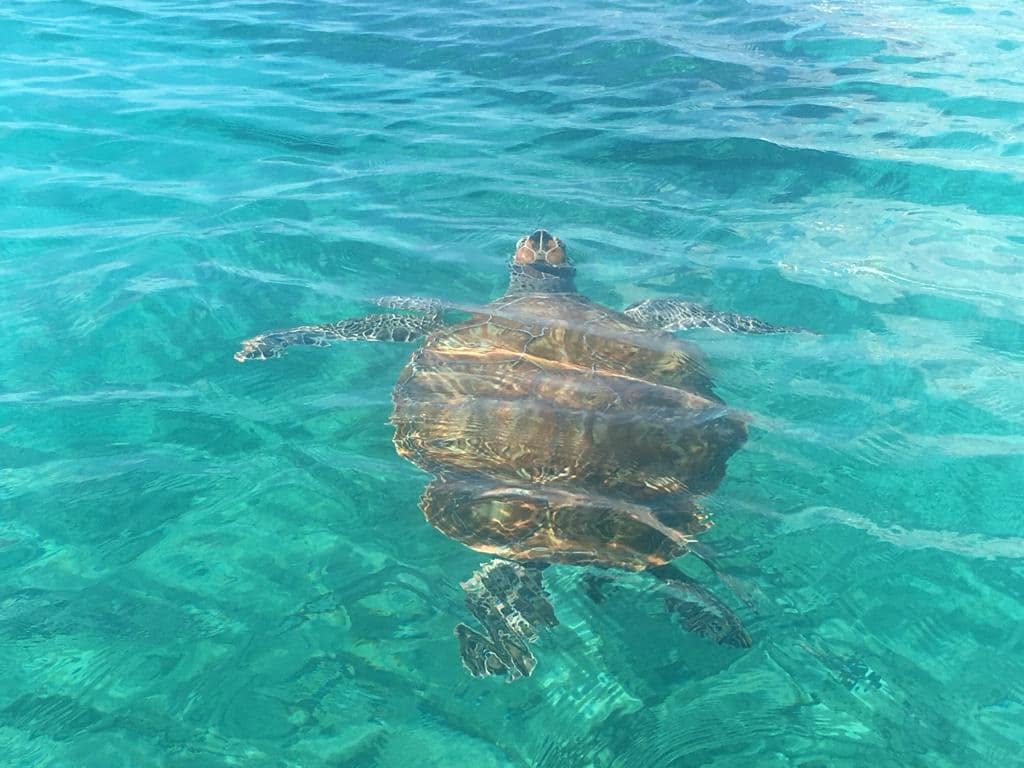
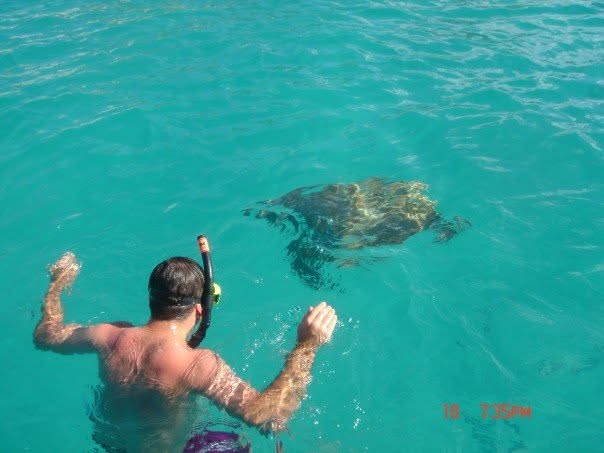
I’ve personally snorkelled with sea turtles in Barbados, and it is one of the experiences that stayed with me long after the trip. Seeing a turtle moving naturally through clear water is completely different from simply spotting one from a boat.
That first-hand experience is also why I think the best encounter is often the least forced one. You do not need to touch a turtle, crowd it or chase it for a photograph. Give it room, stay calm and let the animal decide whether the encounter lasts ten seconds or several minutes.
My advice: choose a trip for the quality of the snorkelling, safety and size of the group—not because somebody promises an unnaturally close turtle encounter. The photograph is a bonus; watching the animal behave normally is the real experience.
Compare the main locations
Where to snorkel with turtles in Barbados
Turtles move, feed and surface wherever conditions suit them. The locations below describe where encounters and organised trips are commonly associated—not places where an animal will appear on demand.
| Location | Best for | Typical experience | Shore or boat? | Main advantage | Main watch-out |
|---|---|---|---|---|---|
| Carlisle Bay | First visitWrecksCruise day | Turtle stop combined with one or more wreck or reef stops, depending on the operator and trip length. | Boat recommended for most visitors; shore snorkelling is better left to confident swimmers with local knowledge. | The broadest choice of short boats, glass-bottom trips, small groups and longer catamarans. | Heavy boat and excursion activity in parts of the bay; do not swim towards wrecks casually. |
| Paynes Bay | West-coast staysShort outing | A west-coast snorkel trip or a cautious independent swim from a suitable public access point. | Both are possible, but a guided boat improves orientation and boat awareness. | Convenient for Holetown, Sandy Lane and west-coast accommodation. | Turtles are less predictable from shore; watercraft use the coast and public access can be subtle. |
| Folkestone Marine Park | Reef lifeLearningHoletown | Nearshore reef snorkelling, fish and occasional turtle activity within a recognised marine-reserve setting. | Shore snorkelling when conditions suit; guided options may operate along the coast. | A more reef-focused experience with a park setting and marine context. | Reef, current, visibility and boat zones still require attention; sightings cannot be promised. |
| Holetown, Alleyne’s Bay and central west coast | Hotel pickupCouples | Small boats and catamarans visit known feeding and reef areas along the Platinum Coast. | Boat is generally the clearest option for visitors unfamiliar with the exact entry. | Fits naturally into a west-coast beach holiday without travelling to Bridgetown. | “Turtle area” may mean an operator’s regular route, not a fixed wildlife location. |
| Dover and selected south-coast areas | Occasional sightings | A beach swim or snorkel where a hawksbill may be seen, rather than a dedicated turtle excursion. | Mainly shore-based. | Useful when the beach day matters more than making turtle sightings the central objective. | South-coast chop, reef and visibility vary; do not build the day around an expected sighting. |
Best decision for most people: book a guided Carlisle Bay trip for the turtle-and-wreck experience, then use independent shore snorkelling on another day for fish, reef and the pleasure of exploring slowly.
Best all-round choice
Carlisle Bay: turtles, wrecks and the widest choice of tours
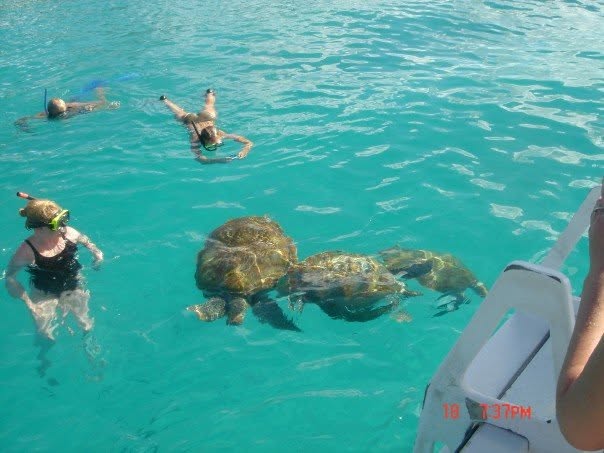
Carlisle Bay is the most straightforward answer to “where can I snorkel with turtles in Barbados?” The bay curves immediately south of Bridgetown and contains several wrecks that have become artificial reefs. Fish, rays and turtles may be seen around the wider marine environment, while established operators know the sections used for organised snorkelling.
The phrase “Carlisle Bay tour” covers very different products. A twenty- or thirty-person catamaran with lunch and drinks is not the same experience as a small snorkel boat, a glass-bottom boat from the beach or a private charter. Compare time in the water—not only total advertised duration.
- Choose Brownes Beach or Pebbles Beach as your land base rather than asking a taxi simply for Carlisle Bay.
- Book a short dedicated snorkel trip when turtles and wrecks are the priority.
- Book a half-day catamaran when sailing, lunch, drinks and social atmosphere matter equally.
- Tell the crew about weak swimmers, anxiety or medical needs before departure.
- Use the provided flotation when it improves confidence and control.
Our honest view: confident swimmers may be tempted to swim from shore to the wreck area. Distance, boat traffic and navigation are easy to underestimate from the beach. A short guided boat is usually the better first experience.
Best west-coast alternative
Paynes Bay and the central west coast
Paynes Bay is regularly associated with green and hawksbill turtle activity offshore and is a common route for west-coast snorkel boats. It is the practical alternative for visitors staying near Holetown, Sandy Lane, Hastings of St James or the resorts farther north.
The experience is usually less concentrated than Carlisle Bay. There is no single wreck cluster acting as the obvious destination, and independent swimmers need to understand public access, reef patches, depth and boat movement. That can produce a quieter encounter—but it also gives the visitor more responsibility.
- Choose a small local boat for a direct snorkel rather than travelling south solely to board another boat.
- Ask where the trip actually snorkels; “west coast turtle tour” can cover several bays.
- Use shore snorkelling only in suitable conditions and remain close to a known exit.
- Do not follow a turtle farther offshore or into vessel routes.
Our honest view: Paynes Bay is better for a flexible west-coast holiday than for a visitor who wants the most structured first snorkel. Choose it because it suits your base—not because anyone can guarantee a quieter turtle.
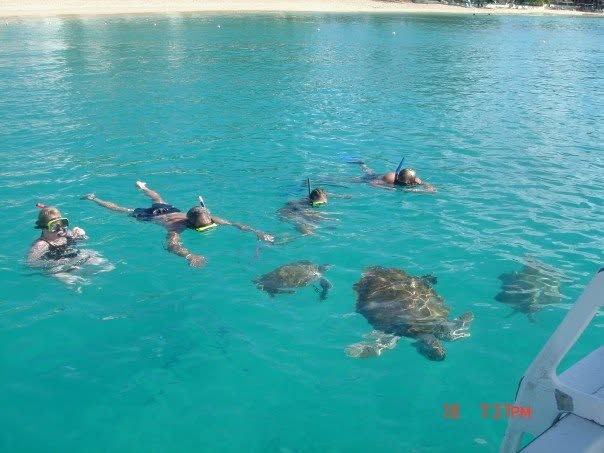
Choose the experience, not only the boat
Which Barbados turtle tour is right for you?
Short snorkel or glass-bottom boat
Usually the clearest choice when turtles and wrecks are the main goal. Trips leave from beaches around Carlisle Bay and may spend roughly one to two hours on the water, depending on the operator.
- Best for: cruise visitors, families, first-time snorkellers and people who dislike long boat days.
- Check: actual snorkelling time, number of stops, shade, ladder access and flotation.
- Trade-off: less sailing atmosphere and fewer onboard facilities.
Small-group snorkelling boat
A focused trip with a lower guide-to-guest ratio can provide a calmer briefing, quicker water entry and more chance to adjust the session around ability.
- Best for: nervous swimmers, photographers, families wanting attention and experienced snorkellers avoiding a crowd.
- Check: maximum group size—not the number currently booked.
- Trade-off: generally costs more per person than a large boat.
Half-day catamaran cruise
This combines sailing, swimming, a turtle stop, lunch, drinks and coastal scenery. The turtle encounter may be only one part of a much broader day.
- Best for: couples, groups and travellers who want a social boat day.
- Check: passenger capacity, shade, swimming stops and alcohol timing.
- Trade-off: the headline “turtle cruise” may involve limited time near turtles.
Private charter
A private boat provides control over pace, water time and assistance, subject to conditions and wildlife. It can be especially valuable for multi-generational groups.
- Best for: privacy, accessibility planning, celebrations and mixed swimming abilities.
- Check: whether the quoted price includes crew, fuel, equipment, food and transport.
- Trade-off: the most expensive option and still no wildlife guarantee.
Kayak or paddleboard tour
These trips offer a quieter way to move around the bay and may combine surface viewing with a snorkel stop. They demand more balance and sun exposure than a conventional boat.
- Best for: active travellers comfortable on small craft.
- Check: capsize plan, flotation, dry storage and boat-lane awareness.
- Trade-off: less shade and harder conditions when wind increases.
Independent shore snorkelling
This gives complete freedom and costs little beyond equipment, but entry, exit, current, navigation, supervision and vessel awareness are entirely your responsibility.
- Best for: competent snorkellers exploring known nearshore reef in calm conditions.
- Check: exact access, local advice, marine forecast and a visible shore landmark.
- Trade-off: lower likelihood of a structured turtle encounter.
Ask before paying
Ten questions that expose what a turtle tour really includes
Price comparison tip: compare the cost per useful experience, not the cheapest headline. A shorter trip with a small group and forty useful minutes in the water may deliver more than a long cruise with a crowded ten-minute stop.
Tour or shore?
The simplest way to decide
Choose a guided boat when…
- This is your first time snorkelling in Barbados.
- Seeing turtles is one of the main reasons for the outing.
- You want to visit the Carlisle Bay wrecks.
- Your group includes children, nervous swimmers or mixed ability.
- You need flotation, a guide or help getting equipment right.
- You are visiting from a cruise ship and time matters.
Choose shore snorkelling when…
- You are a competent swimmer and experienced snorkeller.
- The sea is settled and you know the entry and exit.
- You are content to see reef and fish without a turtle guarantee.
- You can identify and avoid boat or watersports areas.
- A companion knows your route and remains aware of you.
- You will turn back before fatigue or conditions become a problem.
Do not independently swim towards the Carlisle Bay wrecks because they look close from shore. Boat movement, distance, depth and the difficulty of keeping a fixed shoreline reference make this a poor first-time plan.
Timing matters—but not in the way people expect
Best time for snorkelling with turtles in Barbados
Best time of day
Morning is usually the strongest starting point. Heat is lower, the bay may be less busy and visibility is less likely to have been disturbed by a full day of swimmers and boats. Official Barbados guidance also notes that snorkelling is safer when fewer boats are around.
Best time of year
Green and hawksbill turtles forage in Barbados waters, so snorkelling encounters are possible throughout the year. Dry-season conditions often produce calmer-looking water and clearer visibility, but wildlife and sea state do not follow a visitor calendar.
Nesting season is different
A nesting turtle on a beach is not a snorkelling attraction. The Barbados Sea Turtle Project monitors hawksbill nesting on leeward beaches from 1 June to 15 November and leatherbacks on the east coast from 1 March to 31 July.
Do not choose a tour because it promises a “100% turtle guarantee”. The operator may know productive areas, but a wild animal owes nobody an appearance. Look instead for responsible language, sound safety systems and a good wider snorkelling experience.
The encounter belongs to the turtle
How to snorkel responsibly with sea turtles
A better success measure: “We watched a turtle feeding naturally for two minutes” is a better encounter than “We got close enough to touch one.”
Know what you may see
Sea turtle species in Barbados
Green turtle
Green turtles are commonly associated with nearshore feeding areas and seagrass. They are one of the species visitors may encounter while snorkelling on the west and south-west coasts.
Look for: a smoother, more rounded head shape and a shell that can show olive, brown and radiating patterns.
Hawksbill turtle
Hawksbills forage around reefs and are the main nesting turtle on Barbados’s leeward west and south coasts. They play an important ecological role on coral reefs.
Look for: a narrower, pointed beak and overlapping-looking shell plates, although identification underwater should never become a reason to crowd the animal.
Leatherback turtle
Leatherbacks are the largest sea turtle species and occasionally nest on Barbados’s east coast. They are not the routine animal promoted on nearshore turtle-snorkelling trips.
Planning point: treat a leatherback nesting report as a conservation event and follow the Sea Turtle Project—not as an invitation to organise your own night search.
Why protection matters: hawksbill, green and leatherback turtles occur around Barbados, and the Barbados Sea Turtle Project confirms that sea turtles, their eggs and nests are legally protected. Observing them responsibly protects both the animal and the experience for the next visitor.
Water safety first
Snorkelling safety in turtle and wreck areas
Boats
- Use the entry area selected by the guide.
- Keep away from engines and propellers.
- Never assume a skipper has seen your head above water.
- Remain inside the group’s stated boundary.
- Do not chase wildlife into a vessel route.
Ability and equipment
- Use flotation when it helps you relax and remain controlled.
- Practise breathing through the snorkel before leaving the boat.
- Clear a leaking mask while holding flotation or beside the guide.
- Do not wear fins that are too loose or tight.
- Tell the crew immediately when anxiety rises.
Sea conditions
- Check the Barbados marine forecast before independent snorkelling.
- Do not enter when waves, current or visibility exceed your experience.
- Keep a shoreline or boat reference in view.
- Leave before cold, fatigue or cramp develops.
- Use a different day when the operator cancels for safety.
Families, weak swimmers and access needs
Choose support before choosing the prettiest boat
Children
Ask the operator’s minimum age, child life-jacket provision and whether an adult must remain within reach in the water. A child who swims confidently in a pool may react very differently to a mask, deep water and fish below.
Nervous or weak swimmers
Choose a small-group boat with an in-water guide, flotation and an easy ladder. Begin beside the boat rather than feeling obliged to follow the group immediately towards the wreck.
Mobility and medical needs
Ask for photographs of the boat, boarding route, ladder and toilet. Confirm whether crew can assist and what they are trained to do. A private trip may be worth the additional cost when timing and transfers need control.
Do not conceal a health condition or swimming limitation because you fear being excluded. The crew needs accurate information to choose flotation, entry method, supervision and whether the trip is appropriate.
For cruise passengers
A sensible turtle-snorkelling plan from Bridgetown cruise port
Best cruise-day format: a short morning glass-bottom or snorkel boat from Carlisle Bay, followed by a limited beach stay. A half-day catamaran is better reserved for passengers whose port schedule comfortably supports it.
Nesting, hatchlings or a turtle in trouble
Call the Barbados Sea Turtle Project hotline
+1 246 230 0142The Barbados Sea Turtle Project asks the public to report turtle nesting, hatching activity and turtles in difficulty. Save the beach name, nearest landmark and exact location, then follow the team’s instructions.
- Do not touch or move eggs, nesting turtles or hatchlings.
- Turn off bright lights and avoid flash photography.
- Keep dogs and crowds away.
- Do not dig into a nest or try to release hatchlings yourself.
- Keep the route between the turtle and sea clear.
See the main areas
Map of Carlisle Bay turtle-snorkelling area
The map is centred on Carlisle Bay. Open the individual guides for Brownes Beach, Pebbles Beach, Paynes Bay or Folkestone Marine Park, rather than relying on a general “turtle beach” label.
Questions travellers ask
Snorkelling with turtles in Barbados FAQs
Where is the best place to snorkel with turtles in Barbados?
Carlisle Bay is the best all-round choice because it combines established operators, sheltered water on suitable days, shipwrecks and easy access near Bridgetown. Paynes Bay and the central west coast are convenient alternatives for visitors staying near Holetown.
Can you snorkel with turtles from the beach in Barbados?
Yes, turtles may be seen from shore at Paynes Bay, Folkestone Marine Park and other west or south-coast locations. Sightings are unpredictable, and independent snorkellers must manage entry, current, boat awareness and the return to shore. A guided boat is the better first choice for most visitors.
Are turtles guaranteed on a Barbados snorkelling tour?
No. Experienced operators know areas where turtles commonly forage, but the animals are wild and move naturally. Avoid operators whose marketing suggests that touching, feeding or a guaranteed close encounter is part of the product.
What is the best time of day to snorkel with turtles?
Morning is usually the strongest starting point because the heat is lower and popular bays may have fewer boats and swimmers. Sea state, visibility and official guidance matter more than a fixed clock time.
Can you touch or feed sea turtles in Barbados?
No responsible encounter should involve touching or feeding. Give turtles room, keep their route to the surface clear and let them choose whether to remain nearby. Barbados Tourism currently advises against touching and feeding turtles.
Is Carlisle Bay safe for beginner snorkellers?
A guided Carlisle Bay trip can suit beginners when conditions are appropriate and the operator provides a briefing, correctly fitted equipment, flotation and in-water supervision. The bay also has boat traffic, so beginners should not swim independently towards the wrecks.
Which turtle species can be seen in Barbados?
Barbados waters host hawksbill, green and leatherback turtles. Green and hawksbill turtles are the species most associated with nearshore snorkelling encounters. Leatherbacks occasionally nest on the east coast and are not the routine turtle-tour sighting.
Is a catamaran or small boat better for turtle snorkelling?
Choose a catamaran when sailing, lunch, drinks and a social day matter as much as snorkelling. Choose a small snorkel boat when water time, a lower guest-to-guide ratio and a focused turtle-and-wreck trip matter more.
Can cruise passengers snorkel with turtles in Barbados?
Yes. Carlisle Bay is close to Bridgetown cruise port and offers short morning trips. Confirm the exact meeting point and return time, and keep a substantial buffer before the ship’s all-aboard deadline.
What number should I call about a nesting or injured turtle?
Call the Barbados Sea Turtle Project hotline on +1 246 230 0142 to report nesting, hatching activity or a turtle in trouble. Give the beach name, nearest landmark and location, and follow the team’s instructions.
How this guide was checked
This guide combines personal Barbados turtle-snorkelling experience with current information from the Barbados Sea Turtle Project, Barbados Tourism Marketing Inc., Barbados public guidance and Barbados Meteorological Services. Beach-specific recommendations are also checked against the current individual beach guides on this site.
The guide intentionally differs from older promotional material that encourages feeding or touching. Current responsible advice used here is to observe without touching, feeding, chasing or blocking an animal’s path to the surface.
Official Barbados turtle-watching guidance · Barbados Sea Turtle Project · Official nesting monitoring · Sea turtle protection in Barbados · Official marine forecast
Editorial review: 12 August 2026. Wildlife, visibility, sea conditions, tour routes, prices and operator availability can change. No turtle sighting is guaranteed.
Choose the coast before choosing the tour
Plan the rest of your Barbados beach day
Compare Carlisle Bay with west-coast alternatives, check the marine forecast and keep a non-snorkelling option ready. A good turtle encounter is better when the wider day still works even when wildlife chooses not to appear.